
Indiana Arrest Warrants Explained
An Indiana arrest warrant is a judge's written command telling an officer to bring a named person before the court. Indiana Code 35-33-2-1 lays out two charging routes to that order. If an indictment is filed and the defendant is not already in custody, the court generally issues the warrant under that subsection without a separate probable-cause finding. A prosecutor's information works differently. There, the judge must first determine probable cause before issuing the warrant for a person not in custody. Either way, issuance is just one step. The case then moves forward through the Indiana court after the person appears, and the current charging document, warrant, and docket control the particular matter. For a specific case, check current Indiana law and talk with a lawyer rather than relying on a general description.
Indiana Arrest Warrants Follow Two Charging Routes
The information-versus-indictment split matters because IC 35-33-2-1 assigns a different judicial step to each. An information requires the judge to find probable cause before a warrant issues for someone not in custody. An indictment generally calls for the warrant outright when the defendant is not in custody. The case papers tell you which route applies. "Probable cause" here means the judge finds the legal basis that statute demands; it settles nothing about the charge at trial. The split also explains a thin docket entry. A public summary may note that a warrant issued while leaving out the charging documents and the full supporting record. Indiana law controls the process, and the court named in the case keeps the official record. The official Title 35 reference includes IC 35-33-2; for a live matter, confirm the current code text.
- Information
- A prosecutor-filed charging document; the judge determines probable cause on this route.
- Indictment
- A grand-jury charging document that follows a separate statutory warrant route.
- Rearrest warrant
- Arrest process after a prior release or another procedural event; statute gives it a different expiration rule.
Note: The charging paper and order matter; public summaries may omit documents that explain the judge’s statutory route.
Inside an Indiana Arrest Warrant
IC 35-33-2-2 spells out what the written warrant must contain. Those legal elements identify the order and direct the arrest. They are not a promise that a public web result will display matching columns. Indiana publishes no statewide warrant listing, so a local case summary may show less than the signed process itself.
| Person | Name or a description certain enough to identify the person. |
|---|---|
| Offense | The nature of the offense for which arrest is ordered. |
| Date and county | The date of issue and county where it is issued. |
| Signature and title | Signature of the clerk or judge, with the signer’s official title. |
| Command | Direction to arrest and bring the person before the issuing court without unnecessary delay. |
| Bail | The amount, if any, specified by the order. Confirm current terms with the court or sheriff. |
| Directed officer | The warrant is directed to the county sheriff under the statute. |
| Warrant number | No public statewide warrant-number format or search-result field was documented. |
The document's contents come from the statute. A public docket that shows only an event is not the warrant itself. Ask the issuing clerk how an eligible person may request a copy of the warrant or a related order in Indiana.
Indiana Warrant Cases Can Be Temporarily Hidden
Indiana Rule 5(E)(1) lets a court temporarily exclude an entire criminal case when an access request is filed together with an arrest-warrant request. That is a narrow rule. It does not seal every Indiana warrant. Once probable cause is established, the case becomes accessible unless a judge finds the specified risk of flight, harm, or interference with an ongoing investigation. The exclusion order also expires immediately upon arrest under the current rule. Two related provisions sit nearby. Rule 5(A)(5) excludes cases devoted only to investigative process, such as certain search-warrant matters unconnected to a pending criminal case, and Rule 5(E)(2) covers a similar temporary exclusion for certain post-conviction supervision violations. The current Indiana Rule 5 page sets out these headings, and the rule itself controls over what a general search screen displays.
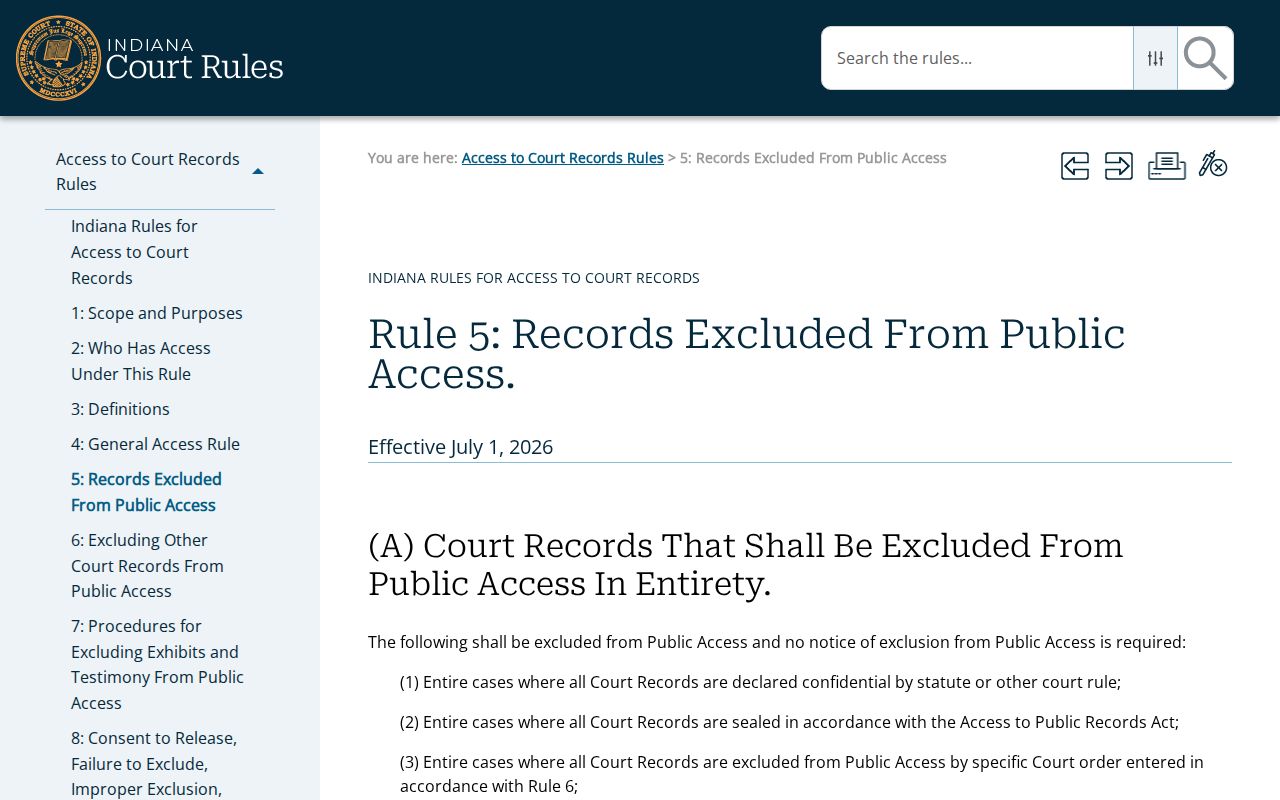
A temporarily hidden case is only an access condition. It does not show that an Indiana warrant is invalid or expired. Ask the court clerk which access rule applies to that case.
Note: Access limits do not determine validity, service status, or whether a court later recalled the warrant.
Serving Arrest Warrants in Indiana
Indiana Code 35-33-2-3 directs the warrant to the sheriff and governs service and arrest. Depending on the court, the location, and agency assignment, a county sheriff, a local police department, an Indiana State Police officer, or another authorized officer may carry it out. The judge stays the issuing authority. The agency receives the process, executes it, and reports service or nonservice back to the court. ISP's published procedures describe how its own officers handle assigned warrants and coordinate with dispatch or the originating agency; they do not create one statewide service unit for every county warrant. After an arrest, the case continues, and release conditions or bond depend on the judge's order and the applicable rules. Confirm current status and surrender instructions with the sheriff or agency the issuing court identifies. For county-issued process, keep two records straight. The court docket and the agency's service record are related but separate: the clerk can explain a docket event or filing step, while the agency can say what its own service system shows. A recall order must come from the court. A phone call to an agency does not change the judicial order.
Indiana Arrest Entries Need IDACS Confirmation
IDACS and NCIC are closed criminal-justice systems. The public has no search door into either one. Indiana State Police materials set out validation duties for warrants kept by ISP's own districts, and that duty is real work. Each district warrant gets checked every 30 days. The issuing court must then confirm whether the warrant still stands. If the court says it is no longer active, ISP removes the wanted entry. Keep that 30-day cycle in perspective. It covers ISP district-maintained warrants only, not every county agency or every Indiana warrant. The IDACS audit procedures spell out authorized use of the system and require confirming a possible hit with the originating agency, all of it about protected system rules rather than a public person search.
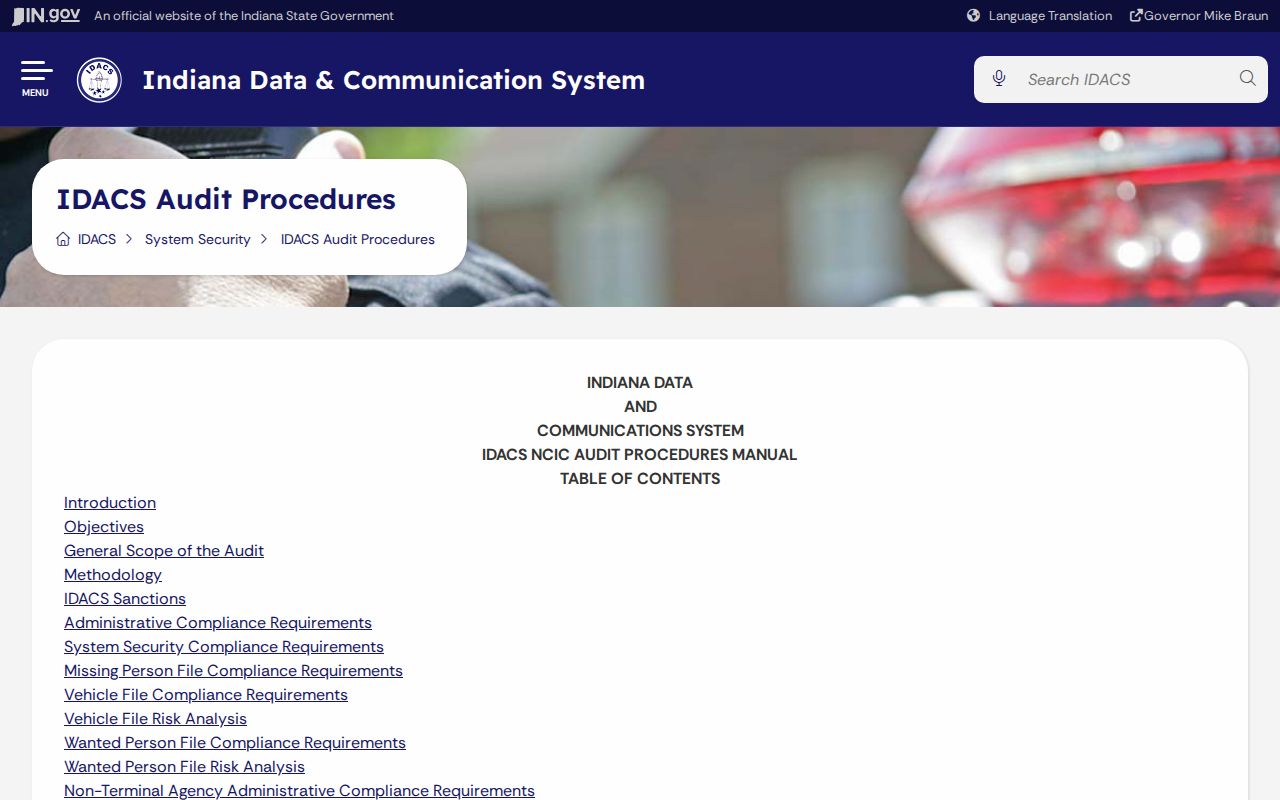
You cannot query or clear an IDACS or NCIC record yourself. No public window into those systems exists. After any court action, ask the issuing court and the agency that entered the warrant to confirm its current status. The ISP warrant-validation policy covers district procedure only, and local Indiana agencies can differ.
Note: The 30-day interval applies to ISP district-maintained warrants described in that policy, not all Indiana agencies.
Comparing Arrest, Summons, and Bench Warrants
An arrest warrant, a summons, and a bench warrant all belong to court process, but each has a different trigger. An arrest warrant commands arrest and presentment. A summons just tells a person to appear in a case. A bench warrant is an arrest order tied to a failure to appear or another court-process event. Some Indiana dockets describe a bench warrant as an arrest warrant too. So the docket and the order matter far more than the label. For the missed-appearance path, see the Indiana bench warrant search.
| Feature | Arrest Warrant | Summons | Bench Warrant |
|---|---|---|---|
| What It Orders | Arrest and prompt presentment before the issuing court | Appearance in the case as directed by the court | Arrest based on a court-process event |
| Basis | Statutory information or indictment route | Case-specific direction to appear | Missed appearance or another failure to comply with court process |
| Who Issues It | The court under IC 35-33-2 | The court handling the case | The court handling the underlying proceeding |
| How to Respond | Confirm status, bond, and court instructions | Attend as directed and follow the notice | Ask the issuing court about appearance or recall steps |
No label settles a case's current status. Check the Indiana docket and the responsible agency directly, especially once a summons date has passed or a bench-warrant event shows up.
Indiana Misdemeanor Warrants Have a 180-Day Term
Indiana Code 35-33-2-4 sets different expiration rules by warrant type. A misdemeanor arrest warrant expires after 180 days. A felony arrest warrant does not expire. Neither does a rearrest warrant, for any offense. When a misdemeanor warrant runs out, the statute maps the path: a return to the issuing clerk, a docket entry, notice to the prosecutor, and possible reissuance if the prosecutor asks. That is machinery, not a shortcut. An old bench warrant or arrest warrant in Indiana is not automatically dead just because time passed. First pin down the legal type of process. Then ask the issuing court whether a return or a reissue appears on the docket. ISP's 2018 validation policy repeats the misdemeanor timing for its district warrants, but it governs ISP records, not every local file. Read IC 35-33-2-4 and the ISP validation procedure for yourself, and confirm current law and the individual docket before assuming a warrant ended on age alone.
Note: The 180-day term is specific to misdemeanor arrest warrants in IC 35-33-2-4; another process may have a different rule.
If There Is an Arrest Warrant for You
Say a case or an official local list points to a warrant. Start by identifying the issuing court. Ask whether the order is still active. Then call the county sheriff or whichever agency is assigned to serve it, for current status, bond terms, location, and surrender instructions. The court clerk handles docket entries, public documents, and the steps for filing a motion or arranging an appearance. Indiana offers no universal online "clear warrant" form, no statewide safe-surrender rule, and no standard bond amount. A lawyer can sort out the real choices: request a recall or quash, appear or surrender, and what release conditions might follow. If a judge changes the order, ask when the clerk will enter it and which agency gets notice. Then confirm the service agency updated its own record. Use the Indiana county directory to reach the county layer of information, and for a city or town court case, start with the court named on the citation. For a public document request, list the county, court, case number, date range, and record sought. The records office may require a form, fees, or an in-person visit, and lawful access limits can apply. A records request never replaces a live status check or a judge's recall order.
Important: Confirm the court, bond terms, and local surrender process with counsel before acting; an active Indiana arrest warrant may be served during law-enforcement contact.
Indiana Arrest Warrant Checks Need Two Offices
The issuing court and the service agency each hold a different piece of the warrant record. The Clerk of the Circuit Court or the local clerk can help locate an official docket, an order, or the public-copy route. The sheriff or agency holding the process can confirm its own service status and local instructions. Neither office stands in for the other. A docket can show a recall before the agency updates its entry. An agency cannot change the judge's order. The Indiana Judicial Branch public-records page routes Office of Judicial Administration requests, though county case files stay with the local court clerk. The Indiana Access to Public Records Act, IC 5-14-3, governs agency records and allows some investigatory material to be withheld. Court access runs under the Indiana Rules on Access to Court Records. Ask the right records office for its official form, fees, and access options. For a local Indiana case, gather the case or citation number and court name, then use the county directory to find the correct sheriff and clerk. A federal warrant is different: it follows a separate federal court and U.S. Marshals path, not Indiana MyCase or any county warrant list.
Note: An APRA response deadline is not a promise of real-time status or same-day production of a requested record.