
Inside the Indiana Most Wanted Program
The state's only verified most-wanted program sits inside the Indiana Department of Correction. Its Operations Division runs it. The entry point is titled "Fugitives: Most Wanted." Its focus is narrow: fugitives tied to IDOC operations. It is not a list of every Indiana arrest warrant. County bench warrants, traffic warrants, and city-court orders stay out of it entirely. The official landing page states the program's current scope and lists its contact instructions, so treat that page as the authority. No names or photographs appear here. The unit behind the effort has a history; IDOC launched its Fugitive Apprehension Unit in 2007. That date marks a corrections milestone for IDOC fugitives, not a count or history of Indiana court warrants.
Indiana Department of Correction: Fugitives
The IDOC Operations Division page is the official entry point for the corrections fugitive program. Follow the agency’s own current instructions for any program question.
For current scope and contact instructions, open the official IDOC landing page for the Indiana fugitive program.
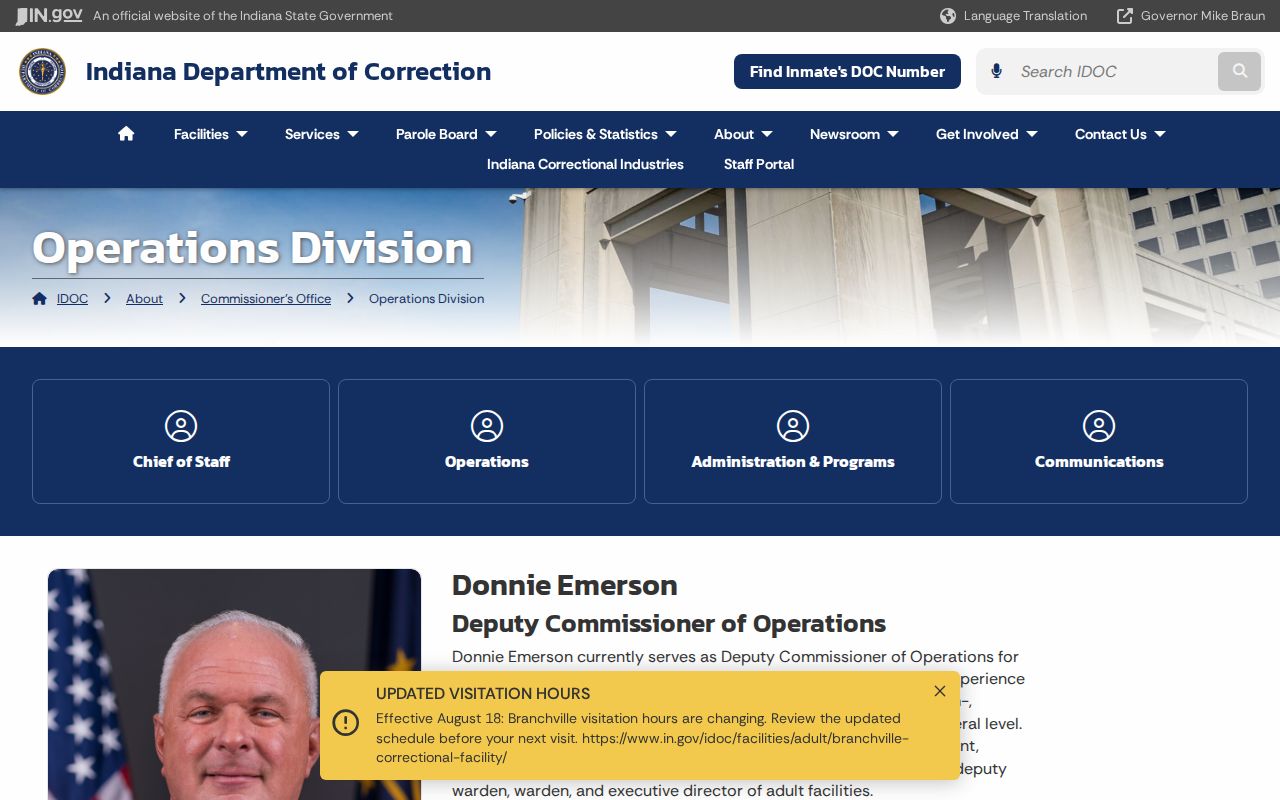
The image shows the program’s agency-level landing page rather than any person-level profile.
Indiana Has No Full Public Warrant List
Indiana has no public statewide warrant search. The IDOC list serves a corrections function, not a public lookup. The Indiana Judicial Branch is blunt about MyCase. MyCase is a case portal; it does not provide a warrant search, and it does not search all arrest warrants statewide. A public case summary can still show a warrant event when the underlying case is available. It can't certify current service status. Keep that limit in mind. A blank result does not prove no warrant exists. The person may fall outside IDOC's program scope. Maybe the court isn't represented for that case or date, a record is restricted, or the local list is only a subset. So check where the warrant would live. Identify the issuing court and ask the sheriff or other agency responsible for service about current status. The Indiana Judicial Branch warrant FAQ explains MyCase's limits and points people to local courts.
Indiana Statewide and County Most-Wanted Lists
Indiana's one verified statewide program lives in the IDOC Operations Division. Below it, sheriff practices vary by county. Some offices publish curated wanted information. Others list only a phone or records contact. A local list can also be narrower than the full set of warrants an office holds, so it never works as a complete Indiana warrant lookup. Whatever the county, check the local program on that agency's own official page.
| Feature | Statewide List | County List |
|---|---|---|
| Purpose | IDOC fugitive program connected to corrections operations | County office may publish a local subset or provide direct confirmation |
| Record Scope | Not all Indiana court warrants | Local agency’s stated scope; publication practices vary |
| Access | Official IDOC Operations Division landing page | County sheriff or issuing court contact |
| What It Cannot Prove | Whether a separate county or city warrant exists | Whether another county’s warrant exists or has been cleared |
Use the Indiana county directory for local channels. It points to each county's sheriff and court contacts, and the agency itself can confirm any local page's stated limits.
No Statewide Indiana Warrant Tip Line Was Verified
Indiana has no statewide warrant tip line. No statewide bounty or uniform reward program covers ordinary Indiana county warrants. The IDOC landing page is the public entry point, but only for its own corrections fugitive program. Don't stretch it into an Indiana-wide tip channel. Counties and federal agencies can run their own. Read before you send anything. Confirm the page belongs to the government agency behind that particular program, then follow only its contact instructions. If an official page never mentions anonymity or a reward, assume neither exists. Tips belong with the agency. And if you're checking your own case or a family member's, skip the tip forms and most-wanted profiles entirely. Go to the issuing court. Ask the service agency there. The Indiana county directory helps locate those local offices without digging through roster entries.
Tip safety: Use only instructions on the official agency page for its own program; do not approach, follow, or attempt to detain anyone shown elsewhere.
Reporting a Tip Safely
Indiana sets up no single statewide tip line or reward process for ordinary arrest warrants. For the IDOC program, one rule applies. Follow the official IDOC landing page's contact instructions only. Don't assume anonymity, a reward, or the same channel another state or county uses. For a local Indiana program, verify the agency's instructions.
- Confirm that the contact page belongs to the agency responsible for the program.
- Read the instructions for the specific program and share information only through the channel it identifies.
- Do not expect anonymity or a reward unless the agency expressly explains those terms.
- For a personal warrant question, contact the issuing court and service agency rather than sending a tip about yourself.
Note: Send information through an official program’s stated channel. Never approach, follow, or attempt to detain someone based on a listing.
Indiana County Warrant Lists Can Be Incomplete
Indiana counties publish wanted lists their own way, and the state sets no single format. One sheriff posts a searchable roster; another curates a short list; a third takes questions only by phone or another local contact. Some Indiana agency pages even warn that their own list is incomplete or out of date, and that caution applies to that agency alone rather than to every Indiana office. So a search that comes back empty only covers that one page, its data feed, and its last update. It does not rule out an active Indiana warrant. Call the sheriff or warrant division to confirm locally, and ask the court clerk about the docket or the underlying order, since a city or town court may keep records on a different route. No statewide Indiana roster exists to backfill a missing or stale county page, so local confirmation is the reliable step. The county directory lists the sheriff and court contacts you need.
How Most Wanted Differs From an Active Warrant
A most-wanted page and a warrant are different things in Indiana. The most-wanted program is a curated public-facing effort with its own eligibility rules and agency scope. An active warrant is different: a court order tied to a specific case. IDOC's program tracks fugitives sought through corrections operations, while a county or local court warrant stays under the control of the issuing court and the agency that serves it. A person can hold a bench warrant in Indiana and never appear on any most-wanted list. That cuts both ways. Missing from the IDOC page says nothing about whether a court warrant exists. To run a real Indiana warrant check, pull out the case paperwork, find the issuing court, and confirm both the court's order and the serving agency's current status. The outstanding warrants page covers the state's public-search limits, and the county directory points to local contacts.
Indiana IDACS Is Not a Public Wanted Profile
The Indiana State Police runs IDACS for criminal-justice users, and Indiana also participates in the National Crime Information Center (NCIC). These systems let authorized agencies enter, query, validate, and confirm records. They offer no public self-service most-wanted search. A law-enforcement hit must be confirmed with the originating agency, which is why the office that entered or holds the warrant matters so much. None of this turns the IDOC corrections program into an all-state police list. IDOC's landing page is the verified entry point for its own fugitives effort. ISP's public website and the IDACS system page describe administrative and law-enforcement functions, not an open person-level warrant roster. So skip any attempt to infer warrant status from a restricted database. For your own case in Indiana, use court and sheriff contacts instead. See the official IDACS system overview for its criminal-justice context, and the ISP Communications and Information Systems page for IDACS administration.
Indiana Warrant Lists: What a No-Result Means
A blank result on an Indiana most-wanted page is not a warrant clearance. The program may not cover that kind of case at all. Online searches can miss on spellings or case identifiers, and public court access excludes some material. Move from the broad program page to the record holders who can answer the specific question: the clerk of the issuing court and the agency serving the order.
| Case events | Search MyCase by citation or case number when court records are available, then ask the clerk to confirm the official docket. |
|---|---|
| Service status | Ask the county sheriff or other agency identified by the court whether its system shows the warrant as active or changed. |
| City or town matter | Contact the local court named on the citation; a county list may not cover that process. |
| Federal process | Use the relevant U.S. District Court or U.S. Marshals channel, not Indiana MyCase. |
Indiana publishes no statewide field list, refresh schedule, or complete county participation map for arrest warrants. A county office can explain its own record and the current way to reach it.
When You Think You Are on a List
Think an IDOC program page concerns you or a family member? Go to the source. Do not lean on a third-party copy or someone else's reading of a profile; use the official IDOC contact instructions to clarify the program record. A county or city-court warrant may be in play too, so ask counsel to help identify the issuing court and confirm the current order with that court and the serving agency. A curated corrections profile and a court warrant run on separate tracks in Indiana. Indiana also has no uniform statewide warrant-amnesty event and no universal voluntary-surrender route. Appearance, bond, and surrender steps depend on the court and agency involved. Ask those offices which procedure applies before you travel. Get legal advice whenever the status or the stakes are unclear.
Important: Consult an attorney if you believe a warrant may exist; confirm the issuing court’s current order and the service agency’s status before deciding how to respond.