
Searching for a Warrant in Indiana
No Indiana website lets the public search every active warrant. Start with MyCase, the state's broad public entry point for eligible court cases, and search by the person's own legal name, citation number, or case number when you have one. That is not a statewide warrant index. A case summary can still be useful: it may show a warrant event, name the court, and hand you a case number. From there, the court clerk holds the official docket, and the sheriff or other service agency can tell you the current status. Treat the search as a map to the right office. Indiana courts include county Circuit and Superior Courts plus local city and town courts, so a ticket or notice may lead to a local court whose records never show up in a county sheriff's online list. When a warrant seems possible, ask the issuing court what the docket shows and which agency holds the process. That call is the real warrant check.
- Search Indiana MyCase for an eligible public case. Select one search path, such as case, party, or attorney, and use the court filter when the issuing court is known.
- Try the citation or case number from the paperwork, then check the name search. Review spelling and date of birth carefully; the date may be absent from a case even when it is an available search field.
- Open the Indiana county directory and contact the county Clerk of the Circuit Court for the official docket or order. For a city or town case, use the clerk named by that court.
- Ask the county sheriff’s warrant division or the service agency identified by the court to confirm whether its records show the warrant as active, served, recalled, or otherwise updated.
- If a case is federal, use the correct federal district court and its public docket route. For any possible arrest warrant, consider speaking with an attorney before arranging an appearance or surrender.
Indiana Warrant Search: MyCase Is Different
MyCase runs on the state's Odyssey case-management system and searches public case records from participating courts. It can find a case, its court, the case number, and eligible docket events. But the Indiana Judicial Branch says plainly that MyCase is not a warrant search, and no public website searches all Indiana arrest warrants. A warrant event in a case summary is court history, not a live service-status answer. What you find depends on the court, the case's public-access status, converted historical records, and the dates covered online. The official Odyssey court list identifies the participating courts and what each covers. Restricted records and documents may never appear online. For the official case record, the local clerk is still the source. The search screen itself offers case, party, and attorney paths. The public search screen is a case-finding tool, and its existence does not mean Indiana runs a public warrant database. Use it to locate where a case sits, then confirm the warrant with the court and agency that hold it.
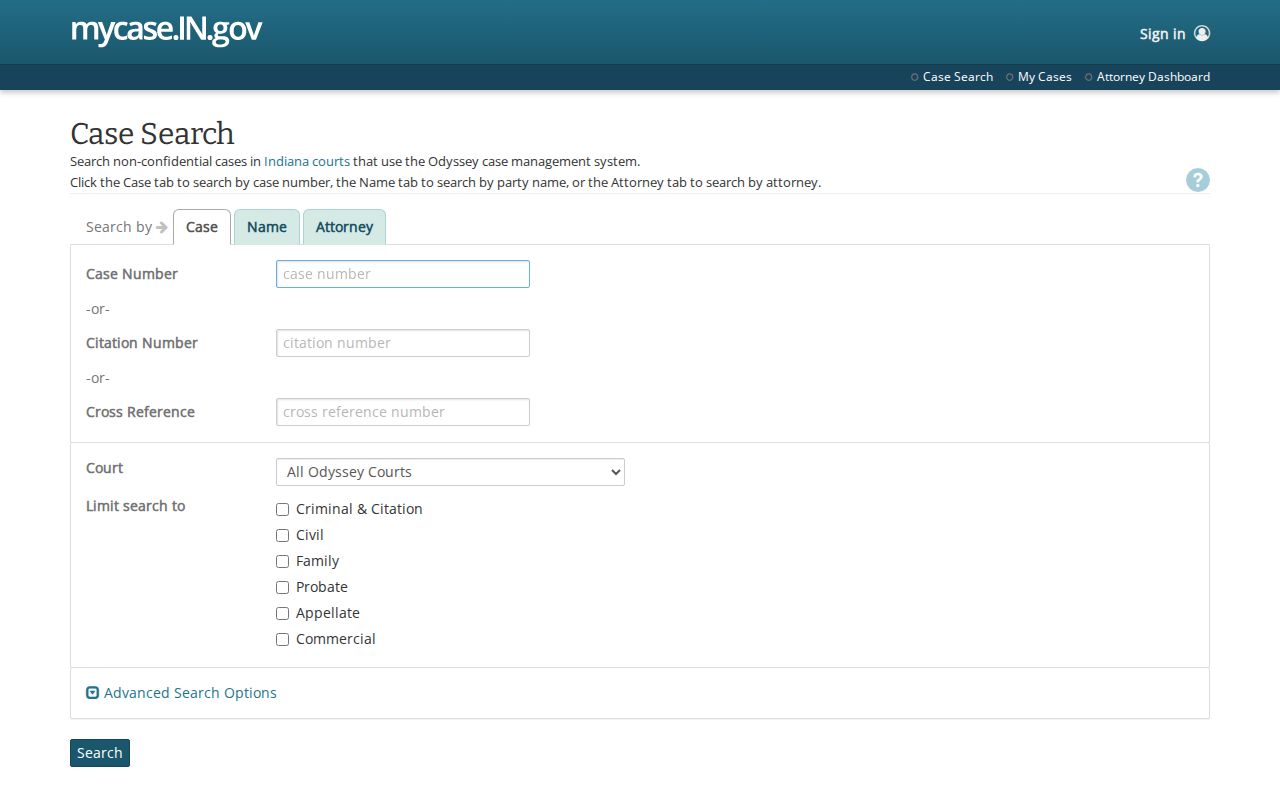
The Judicial Branch's MyCase document-access table lays out which case documents a person can view online or must request in person, by case and record type. It is a guide to paperwork, not an active-warrant status result.Indiana readers should still take the last step themselves.
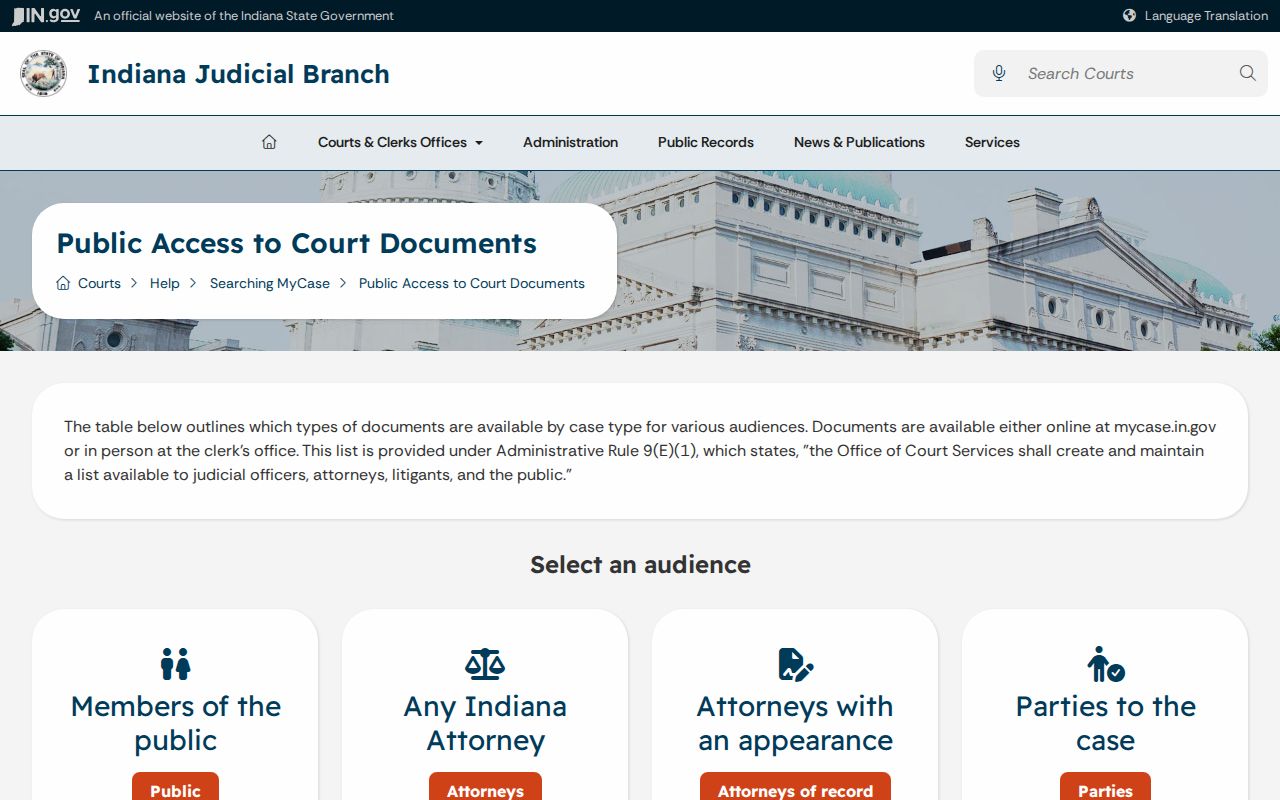
Note: MyCase is a case-finding tool; the Indiana county court and its service agency must confirm current warrant status.
Indiana Warrant Search Fields Explained
Indiana publishes no public warrant-search fields to describe. The fields you see on MyCase belong to its case searches, and they should be read that way. Three search paths exist, each with identifiers and filters that narrow a public case search. None is a warrant-number query. There is no county dropdown promising every county's warrants. Use the identifier printed on the court or citation paperwork whenever you can. Search tips note that case-number hyphens and leading zeroes can sometimes be dropped, while citation and cross-reference formats vary more. A trailing asterisk broadens a name search, but it cannot stand in for an entire first or last name. The MyCase search tips describe these public controls and their limits.
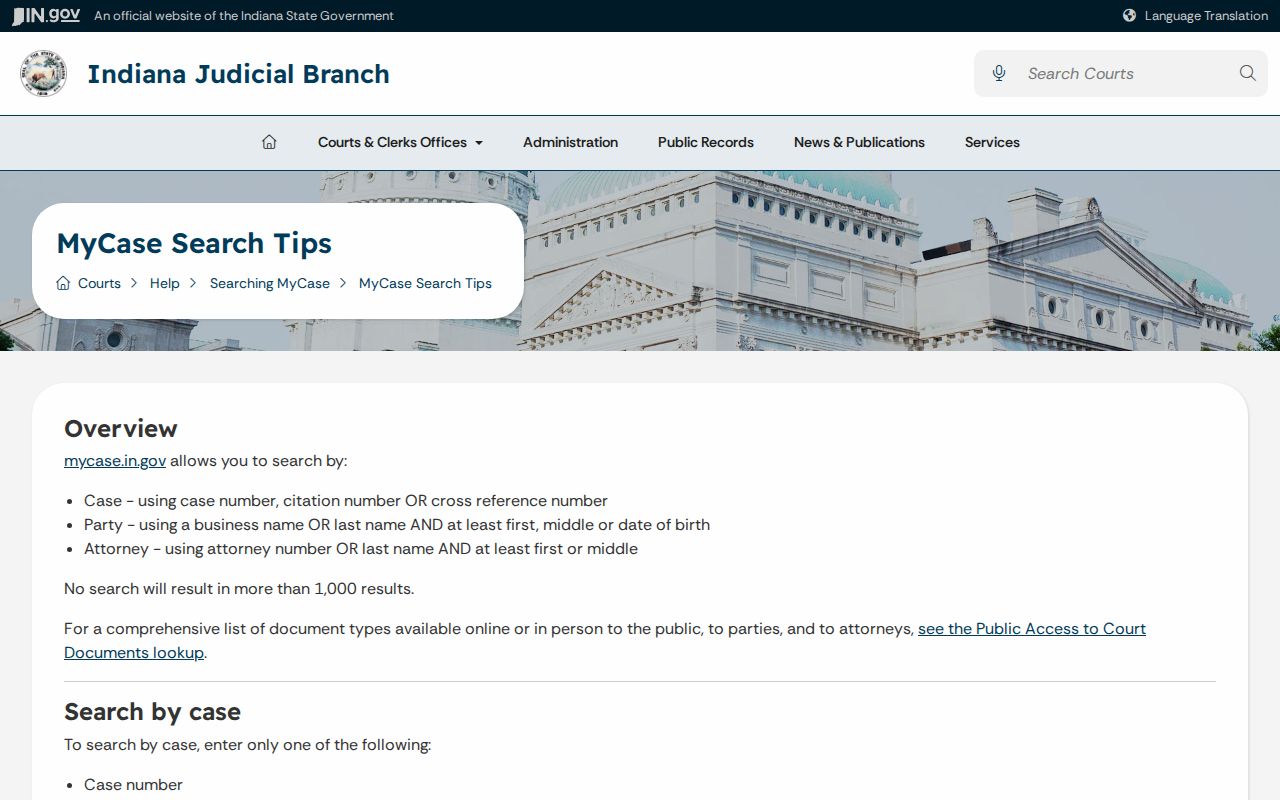
Filters can change how the Indiana search behaves, so check the current interface rather than old instructions. The screen you see today is the one that counts.
| MyCase Path or Field | Type | Use | Notes |
|---|---|---|---|
| Case | Search path | Select one identifier | Case number, citation number, or cross-reference number; only one identifier is entered at a time. |
| Case number | Text | Identifier on the case path | Hyphens and leading zeroes may be omitted; older numbers can appear in case history. |
| Citation / cross-reference | Text | Identifier on the case path | Formats vary. The citation or agency reference may need to be entered as recorded. |
| Party | Search path | Select one name route | Natural-person last name or business name; first and middle names can narrow a match. |
| Date of birth | Date/text | Optional | May narrow results, but it can be missing from the case record. |
| Attorney | Search path | Select one attorney route | Search by bar number or name fields. |
| Court, case type, status, filing date | Filters | Optional | Options depend on the selected court; a search returns no more than 1,000 results, and a CAPTCHA may appear. |
Indiana Warrant Search Gaps
A narrow Indiana query can miss a case for ordinary reasons. A citation number may follow a different format than a case number. A name search may need a trailing wildcard or a court filter. MyCase may not hold the case at all: the court might not participate in Odyssey, a legacy record may have different coverage, or a rule may restrict public view. The site also caps results at 1,000 per query, so a search that is too broad can bury the case among too many matches. When you can, pull a second identifier from the person's own court papers. Sound-like matching catches alternate spellings, but it cannot be combined with a wildcard. Confirm the case belongs to the right person by weighing the court, citation, and case context, not the name alone. If MyCase returns nothing, call the court named on the notice or ticket and ask whether it keeps the record elsewhere. A missing date of birth does not mean the search is broken; MyCase may simply lack that field for the case. By the same token, a similar name is not proof of a warrant against you. That answer comes only from the Indiana court or agency that holds the case.
What an Indiana Warrant Search Shows
Indiana sets no standard statewide warrant-result format. No sample entry promises a warrant number, bond, status, or holding agency. MyCase can still return a public case summary and docket events where the court and record allow. That is often enough to start. The statutory warrant elements describe the court document itself, not the columns of an Indiana search result. So use the summary for identifiers. Take the court and case number, then check the official docket or request the record from the office that holds it. A sheriff's warrant unit can confirm the service status in its own system. Ask which order controls if the summary, the court file, and the agency's answer ever differ across an Indiana case.
| Warrant number | No public statewide field was documented. Do not mistake a case number or citation number for a warrant number. |
|---|---|
| Person / party | MyCase supports party-name searches. A search match still needs case-context confirmation; no public warrant-list profile was inspected. |
| Offense | A court case may identify a charge. The public warrant-list field layout is not uniform or established statewide. |
| Issuing court | Use the case summary or the notice to identify the court, then confirm against the official docket. |
| Bond or bail | No statewide search field or bond schedule was found. The case order and local court control. |
| Active status | MyCase is not a live service-status check. Ask the issuing court and holding agency whether the warrant is active, served, recalled, or reissued. |
| Case status | MyCase can filter open or closed cases. A case status is not the same as a warrant status. |
Indiana statute lists the fields of a written arrest warrant. Read the current case record and the applicable law instead of expecting every element in the online summary.
Indiana Warrant Roles: Clerk and Sheriff
Indiana splits warrant work between two offices. The Clerk of the Indiana Circuit Court keeps the county trial-court case record for Circuit and Superior Court matters. That clerk can identify the case, the docket, a public copy, and the route for filing a motion. The clerk never recalls a warrant. Only the judge makes that call. An Indiana sheriff or other serving agency answers a different question: what its own operational records show about service status, plus any published local surrender or bond instructions. A docket may show a judge ordered the warrant. The agency's system tracks whether it was served or its entry was updated. If an order recalls the warrant, ask the clerk when it appears on the docket and which agency receives the order. Then confirm the serving agency updated its own record. Indiana State Police helps with warrant service and authorized IDACS/NCIC procedures. It runs no public all-warrant search. It also has no centralized warrant-clearance number. The Indiana Sheriffs directory and local court directory can route you to the office holding the specific record.
Where to Check Warrants in Indiana
An Indiana county case starts with the Clerk of the Circuit Court or the court named on the case paper. The clerk's record establishes the court, case number, orders, and docket events. Service status? Try the county sheriff's warrant division. The court may instead name another serving agency. Some Indiana sheriffs publish local instructions or a curated list. Others rely on phone or in-person confirmation. No single method covers all 92 counties. For a city or town ticket, use that court's own clerk. Its case may not show up in a sheriff's public list or in MyCase with the coverage of a county Circuit or Superior Court case. When the court is unclear, the Indiana local-court directory helps. The county directory links court and sheriff routes. Indiana's public court portal, its restricted law-enforcement systems, local sheriff channels, and municipal-court records are separate sources. None can certify the others are clear.
Indiana City-Court Warrant Checks
Missed a date in a city or town case? In Indiana, the court named on the ticket or summons comes first. Indiana has no Justice of the Peace court tier. An out-of-state model that routes every lower-court warrant to a JP clerk would misroute an Indiana search. Local city and town courts hold limited jurisdiction. They can issue process within that jurisdiction and may keep their own case record through a separate clerk. Bring the citation number and notice details. Ask whether a warrant was ordered, whether it remains active, and which agency serves it. A county sheriff search makes a useful second check. It cannot replace the local court's docket. Noblesville City Court is one documented example. Its public page offers no warrant-search form. If the court names a county sheriff or local police agency as the service contact, follow that office's instructions. For the right county and its local handoff, use the Indiana County Directory.
Indiana Restricted Warrant Access Rules
Indiana treats warrant access through two rulebooks. The Access to Public Records Act, IC 5-14-3, governs agency records, while court case records also follow the Indiana Rules on Access to Court Records. Rule 4 sets a general presumption of public access. Rule 5 lists excluded records and temporary procedures. A law-enforcement agency may also withhold investigatory records under APRA's discretionary exemption. Who keeps the record decides the rule. Rule 5 of the Indiana court rules excludes entire cases used only for investigative requests and process, including certain search-warrant matters unrelated to a pending criminal case. Rule 5(E) adds a temporary exclusion request that can be filed with an arrest-warrant request, subject to the rule's probable-cause and public-access steps. That order expires immediately upon arrest. Juvenile cases carry separate limits. So does protected personal information. The Judicial Branch document-access lookup separates online access from in-person access by case and document type.
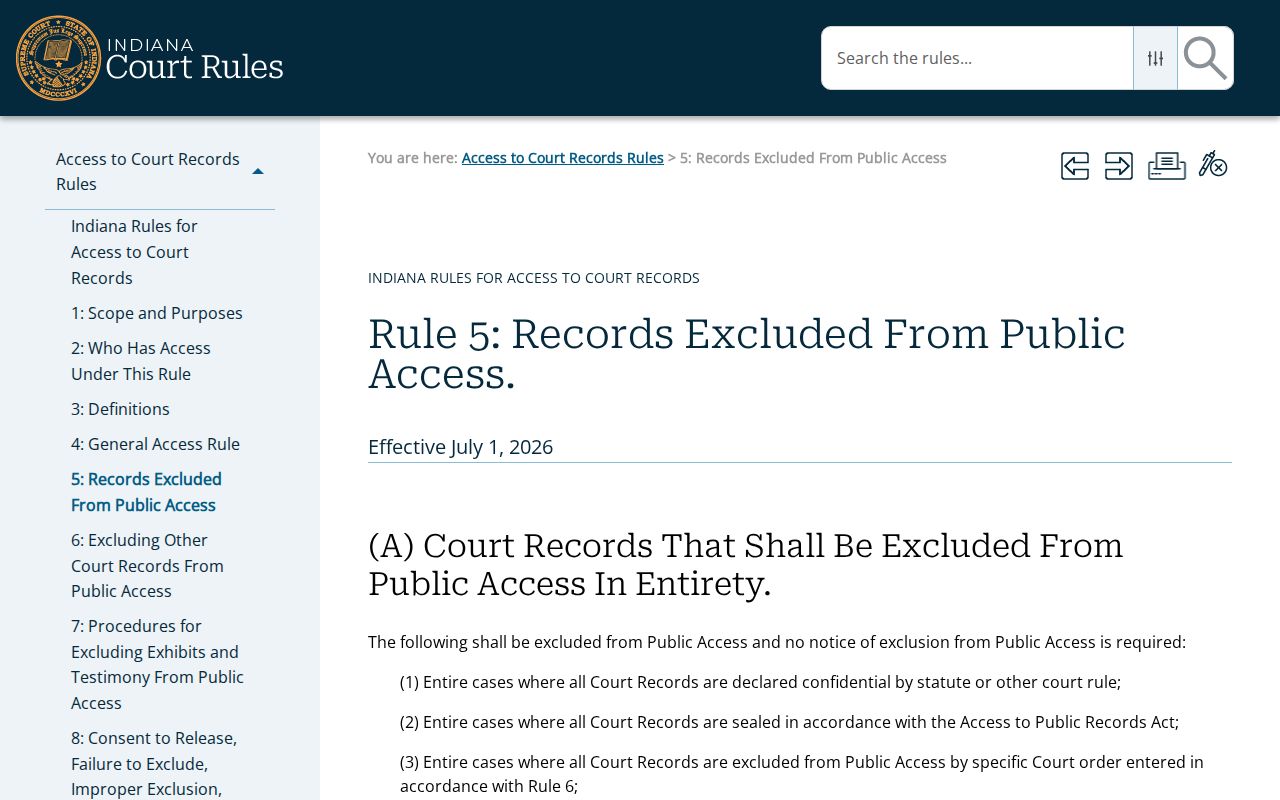
A record missing from MyCase may be restricted, unavailable online, or held by another Indiana court or agency.
Access points:
Indiana Code chapter 5-14-3 governs public access to agency records and recognizes confidentiality and investigatory-record exceptions.
Indiana Access to Court Records Rule 4 sets the public-access baseline for court records, subject to the rule set.
Rule 5 identifies excluded records and temporary access procedures. Its current version took effect July 1, 2026.
Note: Indiana's temporary public-access exclusion changes only what may appear online; it does not decide whether a warrant remains valid.
Requesting Indiana Warrant Records
A warrant record that is not online still sits with a custodian who can produce a copy. In Indiana, that depends on which office holds the file. The county clerk keeps county court case records. A city or town court may use its own clerk. The sheriff or police agency that serves the warrant keeps its own operational records. Records held by the Office of Judicial Administration go through the Indiana Judicial Branch public-record request route, which does not reach every local court file. When you write, describe the county, court, case or citation number, record type, and date range if known. Ask about any required form, identification, copy fee, or in-person visit. Skip sensitive personal details the office does not need. Under APRA, acknowledgment timing depends on how the request is delivered. Those deadlines do not promise when a copy arrives. A custodian may deny or redact material under APRA or the court-access rules, and the Judicial Branch request instructions spell out which requests go to OJA and which go to local custodians.
A records request in Indiana works for checking warrant status, nothing more. It cannot recall an order, so call the issuing court or the serving agency for that.